
Launching the Twin Transition: Empowering Civil Society for Mongolia’s Green and Digital Future
Published: Apr 1, 2026 Reading time: 3 minutes Share: Share an articlePeople in Need (PIN) Mongolia, together with the Delegation of the European Union to Mongolia and government partners, officially launched the Twin Transition Project today. This initiative is designed to strengthen the capacity of civil society organizations (CSOs) to lead Mongolia toward a more sustainable and inclusive future by integrating digitalization with climate resilience.
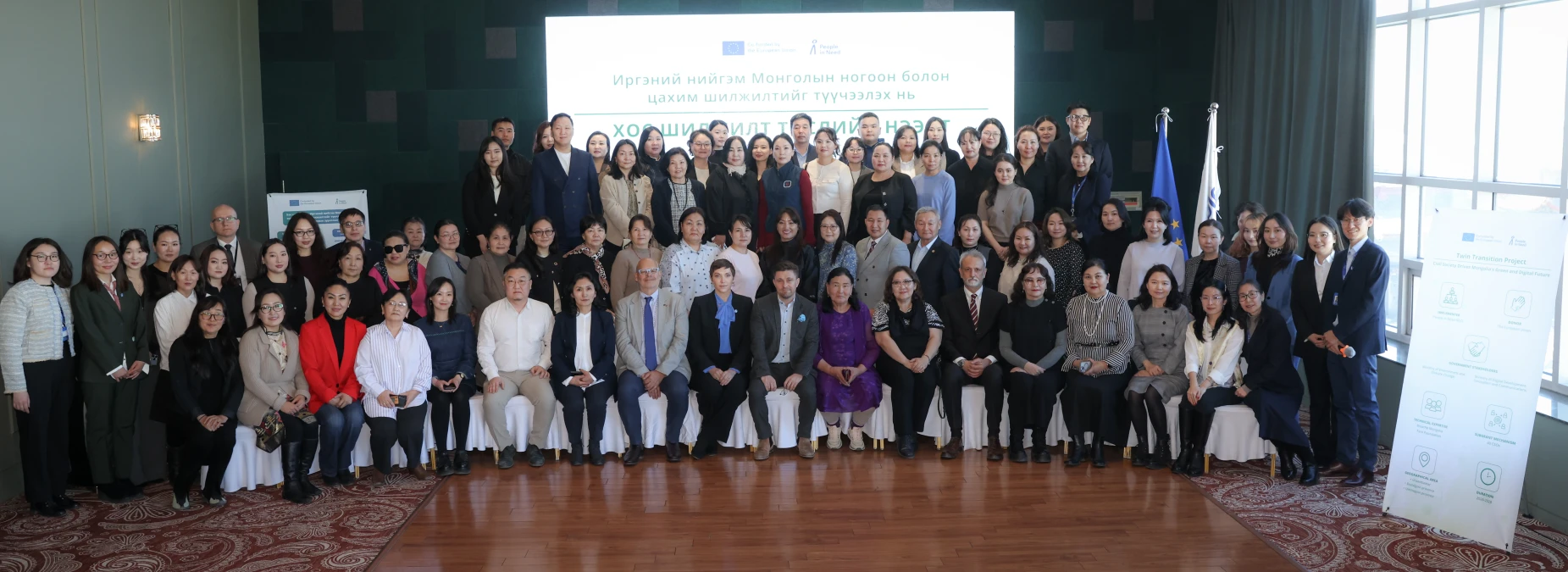
ULAANBAATAR, MONGOLIA – People in Need (PIN) Mongolia, together with the Delegation of the European Union to Mongolia and government partners, officially launched the Twin Transition Project today. This initiative is designed to strengthen the capacity of civil society organizations (CSOs) to lead Mongolia toward a more sustainable and inclusive future by integrating digitalization with climate resilience.

Mongolia is currently facing significant environmental challenges, with over 70% of its territory affected by desertification and land degradation. As Mongolia prepares to host the 17th session of the Conference of the Parties (COP17) to the United Nations Convention to Combat Desertification (UNCCD) in August 2026, the Twin Transition project will work to ensure that civil society is equipped to participate meaningfully in these national and global processes.
Co-funded by the European Union, the project takes a comprehensive approach to strengthening civil society in Mongolia’s green and digital transitions. It focuses on enhancing the organizational capacities, digital skills, and climate action practice skills of CSOs, particularly those working on environmental and youth-related issues, while also fostering collaboration, peer learning, and access to targeted financial support through small grants.
In parallel, the project supports CSOs to actively engage in policy dialogue and advocacy at both national and international levels, including Mongolia’s preparations for COP17. By strengthening these capacities and networks, CSOs will be better equipped to monitor environmental changes, access climate knowledge and finance, and implement evidence-based, locally grounded initiatives.
During the launch ceremony, Mr. Adrien Mourgues, Cooperation Team Leader and First Secretary of Delegation of the European Union to Mongolia, stated “The green transition and digital transformation are mutually reinforcing and essential for building resilient, future-oriented societies. While digitalization offers new opportunities to improve services and governance, these transitions must be inclusive, which is where the crucial role of civil society organizations comes in to ensure development is participatory and responsive to community needs.”
Ms. Tricia Turbold, Country Director of People in Need Mongolia, added that these transitions are reshaping economies, institutions, and communities, requiring well-coordinated and locally grounded responses. She emphasized that the project is not only about capacity building but also about creating networks and providing opportunities for collaboration so that CSOs can learn from each other and collectively contribute to longer-term, systemic change.
The project involves close engagement with the Ministry of Environment and Climate Change and the Ministry of Digital Development, Innovation and Communications. It also draws on the technical expertise of the FARO Foundation and Breathe Mongolia to ensure that the support provided to civil society is both practical and relevant to Mongolia’s shared green and digital goals.
About People in Need (PIN): People in Need established its permanent office in Mongolia in 2011. The organization has implemented 17 projects across 18 provinces to support climate resilience, sustainable markets, and the empowerment of local communities and civil society.


